A remodeler’s sales pipeline is the set of stages every lead moves through, from the first call to a signed proposal. When each stage has a clear next step and a deadline, a good lead can go from first call to signed contract in about a week instead of drifting for a month.
Plenty of jobs aren’t lost on price. They’re lost in the gaps: a callback that came two days late, a proposal that took two weeks, a follow-up that never happened. This guide lays out a simple pipeline and a 7-day timeline you can run with or without software.
The six stages
| Stage | What happens | Exit when |
|---|---|---|
| 1. New lead | A call, form, or referral comes in | Someone has talked to them |
| 2. Qualified | A short call covers scope, budget range, timing, and decision makers | A site visit is booked, or the lead is closed as not a fit |
| 3. Site visit | You measure, listen, and take photos | You have what you need to price it |
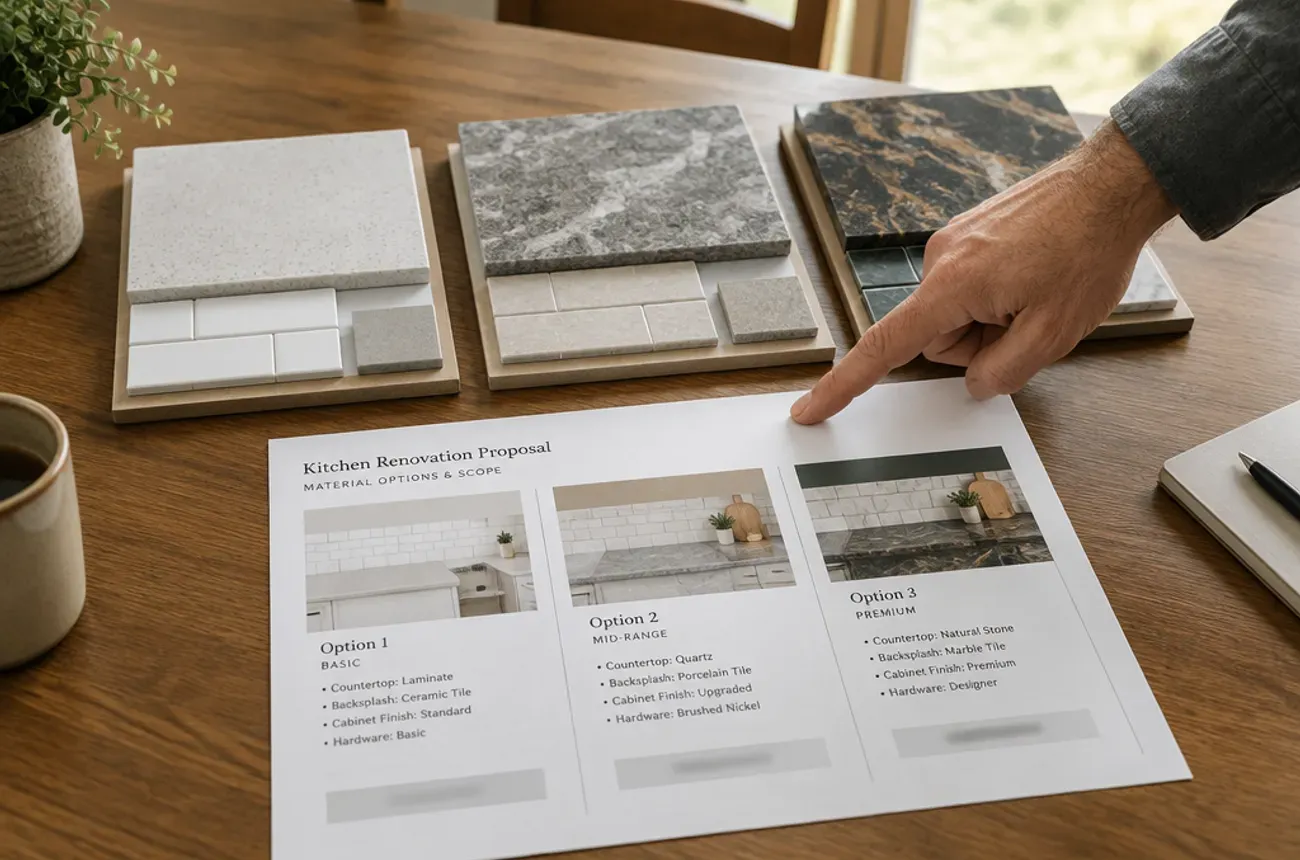
| 4. Proposal sent | A clear proposal with scope, price, and options goes out | The homeowner has seen it and you’ve walked them through it |
| 5. Follow-up | Questions, adjustments, and decisions | They sign, or say no |
| 6. Won or lost | Deposit collected and job scheduled, or the reason for the loss recorded | — |
The qualifying call
Ten minutes on the phone before a site visit saves you hours of driving to jobs you’ll never win. Ask:
- What do you want done, and why now?
- When would you like the work finished?
- Have you thought about a budget range? (Give typical ranges for similar jobs if they haven’t.)
- Who else will be part of the decision?
- Are you getting other bids?
If the budget is far below what the work costs, say so kindly and close the lead. That is a better outcome for both of you than a site visit and a proposal nobody can afford.
The 7-day timeline
| Day | Step |
|---|---|
| Day 1 | Respond to the lead the same day, ideally within the hour. Do the qualifying call or book it. |
| Day 2 | Site visit. Confirm the day before with a text. |
| Day 3 to 4 | Build the proposal. Use templates for common jobs so this takes hours, not days. |
| Day 4 | Send the proposal and walk through it by phone or video the same day. |
| Day 6 | Follow-up call: answer questions and adjust options if needed. |
| Day 7 | Decision. Signed proposal and deposit, or a clear plan for next steps. |
Larger projects with design work take longer, but the same idea holds: every stage gets a date, and nothing waits on someone remembering to do it.
Numbers worth tracking
You don’t need a sales dashboard. Four numbers, checked weekly, tell you where the pipeline leaks:
- Lead response time: how long it takes to talk to a new lead.
- Lead-to-visit rate: how many leads book a site visit.
- Visit-to-proposal time: how many days from the site visit to the proposal.
- Close rate: how many proposals are signed.
If response time is slow, fix it before anything else. If proposals take more than a few days, build templates. If the close rate drops, look at your follow-up; our estimate follow-up guide has a sequence and templates.
Keep the pipeline in one place
A pipeline only works if everyone can see it. Sticky notes on a wall work for one person. Once two or three people handle leads, put it in your software, with each lead’s stage, next step, and date.
Where MotionOps fits
MotionOps runs the sales side and the job side in one system, for contractors whose jobs run for days or weeks:
- CRM with every lead and its stage
- Proposal builder with e-signatures, so the signed proposal stays with the job
- Proposals and reminders sent by email or text
- Scheduling of site visits and, once signed, the job itself
Try MotionOps free for 14 days and move your open leads into one pipeline this week.