Winning local work today isn’t just about yard signs, referrals, or word of mouth. When homeowners or businesses need help - whether it’s a leaking water heater, a blown breaker, a roof issue, or a small remodel - their first instinct is simple: pull out the phone and search.
If your business shows up prominently in those local search results, you’re in the running. If it doesn’t, you’re invisible. And invisibility in local search means slower weeks, fewer inbound calls, and more reliance on paid ads or referrals to stay busy.
Local SEO isn’t about becoming an online marketing expert. It’s about making sure your business appears in the places customers are already looking - Google Maps, local search results, and service-related queries. When those pieces work together, you get a steady stream of high-intent leads without spending heavily on ads.
Why Local SEO Matters More for Trades Than Almost Any Other Industry
People needing home services or small commercial work make fast decisions. They want:
- Someone nearby
- Someone trustworthy
- Someone who looks established
- Someone with real reviews
That decision often happens right inside the Google search results, before they ever visit a website.
For trades, local SEO isn’t theoretical. It’s the digital version of being the business everyone in town knows. When you show up consistently in the top three map listings (“the local pack”), your phone rings with less effort, and the leads tend to be better.
It’s visibility that compounds month after month.
Your Google Business Profile: The Home Base of Local Search
Your Google Business Profile (GBP) is the listing that shows in Google Maps and local results. Google says “Local results are mainly based on relevance, distance, and popularity.” When someone searches “electrician near me,” “plumber in Dallas,” or “roofers open now,” that GBP listing determines whether you appear in the search results that matter most.
To compete, your profile needs to be complete, active, and accurate. That means:
- Real jobsite photos
- Correct service areas
- Updated hours
- Services listed individually
- A strong description written in plain language
Google’s own tips for local ranking: verify your business, keep your business information up to date, respond to reviews, and add photos and videos. It also says: “There’s no way to request or pay for a better local ranking on Google.”
Before you set it up, two rules from Google:
- If you work at your customers’ homes rather than at your own address, Google says: “If you’re a service-area business, you should hide your business address from customers.” List your service area instead.
- Your name “should reflect your business’s real-world name, as used consistently on your storefront”. Don’t add keywords or a city to it unless they’re part of your real business name.
Reviews: The Currency of Local Trust
Nothing influences local search like authentic reviews.
Not generic, “Great service!” reviews, but detailed ones describing exactly what you did. Google says “More reviews and positive ratings can help your business’s local ranking.”
A steady flow of reviews improves three things at once:
- Ranking - you appear in more searches
- Conversion - customers trust you faster
- Visibility - Google shows your profile to more people
The trick is building a simple process:
Techs finish a job → customer gets an easy review request → review goes straight to Google.
No pressure. No scripts. Just a routine.
Over a year, that routine becomes a competitive advantage.
Local Content That Google Understands
Google loves relevance. If you create content that clearly ties your services to your local area, Google knows you’re not a national chain posing as a local contractor.
That means:
- Service pages tailored to specific cities or neighborhoods
- Job recap posts that mention areas you service
- Photos from real jobs in the areas you serve
- Descriptions using local landmarks or common issues
For example:
“Installed a breaker panel upgrade in the Lakeview neighborhood after repeated tripping issues” works far better than “Completed an electrical panel upgrade.”
Local context helps Google connect your business to real geographic demand.
Your Website: Built for Local Intent, Not Decoration
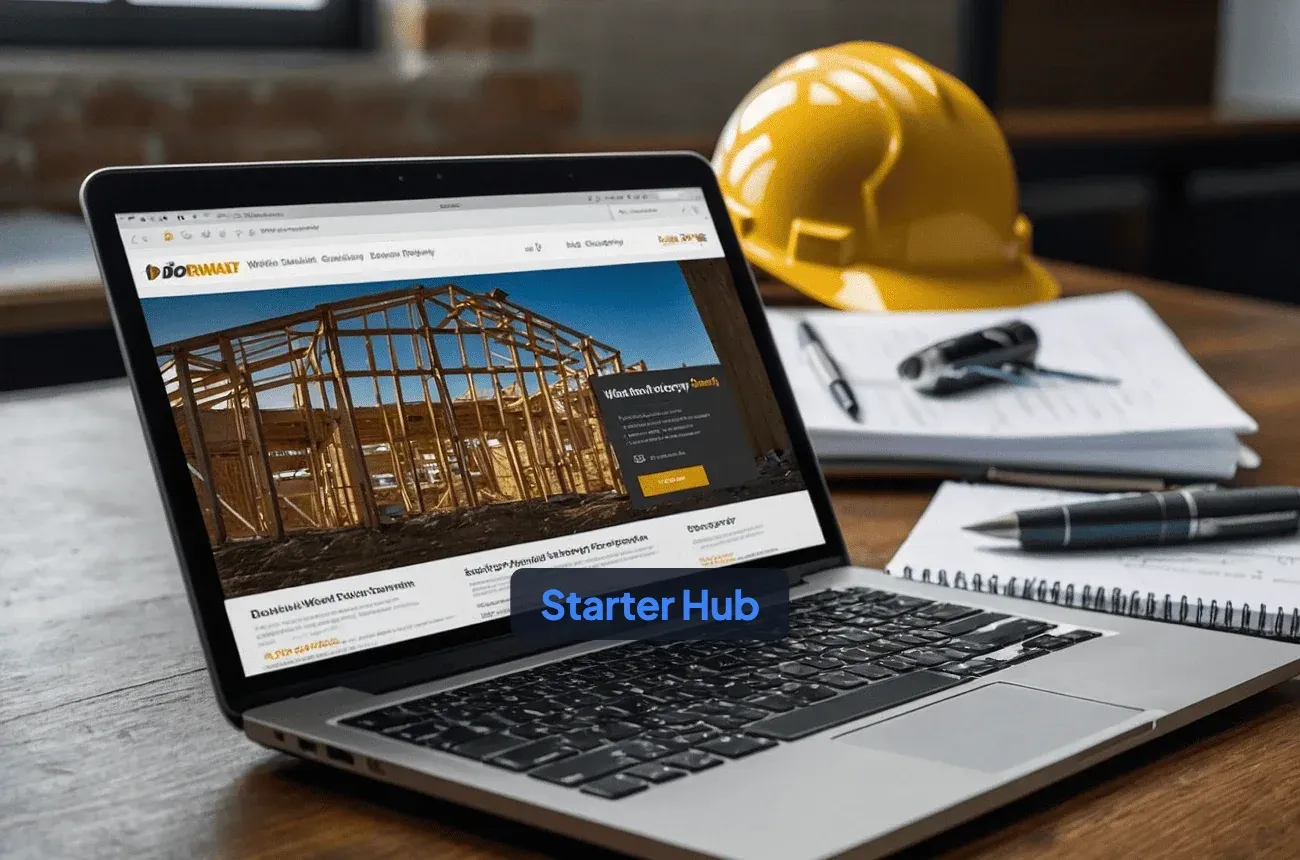
A contractor’s website doesn’t need to be flashy. But it must help Google and customers identify what you do, where you do it, and why you’re legitimate.
A strong contractor website includes:
- Clear service area pages
- Each major service on its own dedicated page
- Job photos and real project descriptions
- A click-to-call phone number
- Fast load speed and mobile-friendly layout
- Consistent business information (NAP: name, address, phone)
Google doesn’t need a beautiful site - it needs a clear one.
Keep the website and your Google Business Profile consistent: the same name, phone number, services and service area.
A homepage outline for a new contractor:
- Headline: what you do and where, in one sentence, for example “Interior painting for homeowners in [town] and nearby.”
- Call and quote buttons at the top, so a visitor on a phone can reach you in one tap.
- Your two or three main services, each with a short description in the words customers use.
- Service area: the towns or neighborhoods you cover.
- Photos of real work, used with the customer’s permission.
- How it works: estimate, scheduling, the job, the invoice, in four short steps.
- About you: experience, license number if your trade is licensed, and that you’re insured.
- Reviews, once you have them.
- A short contact form: name, phone, address and a description of the job. Nothing more.
Open the page on your own phone before it goes live: if you can’t call or request a quote within a few seconds, fix that first.
Citations and Local Consistency: The Quiet Ranking Booster
Citations are simply your business name, address, and phone number appearing consistently across the web - directories, industry listings, associations, local business sites, and any place your business is mentioned.
Why it matters:
Google uses consistency as a trust signal. If your info is identical everywhere, you look reliable.
If your business name varies, your old address is still floating around, or the phone number changes depending on the site, your ranking suffers quietly.
This isn’t exciting work, but it’s foundational. Clean citations help you rise steadily in local search.
The Role of Photos and Real Work Documentation
Photos show customers your real work, and Google lists adding photos and videos among its tips for local ranking.
Regular jobsite photos tell Google that you’re active in your area right now.
Add new photos from real jobs regularly, with each customer’s permission, so your profile shows current work.
Authenticity beats marketing polish every time.
When Local SEO Starts Working, Your Lead Flow Changes
As your local presence strengthens, the nature of your leads shifts:
- Less price shopping
- Fewer low-quality inquiries
- More customers choosing you because you appear trustworthy
- Higher conversion rates from maps and search results
- More inbound calls from people in your ideal service area
Local SEO doesn’t generate random leads.
It attracts the customers already looking for exactly what you do.
For service contractors, that’s the most valuable form of marketing.
Conclusion: Local SEO Isn’t Marketing - It’s Modern Visibility
Local SEO isn’t about tricking Google or mastering complex strategies. It’s about showing up where your customers already look, presenting clear information, building trust through real reviews, and proving your business is active in the community you serve.
When your Google Business Profile, website, and local signals all align, your market starts to recognize your business before you even show up.
Visibility becomes predictable.
Leads become steadier.
Quality improves.
And your service area becomes a pipeline, not a question mark.
The customers are searching.
Local SEO makes sure they find you.
Contractor Starter Hub: Get Your First Customers, lesson 2 of 5
- Previous lesson: Choose Your Services and Ideal Customer: Write an Offer People Understand
- Next lesson: How New Contractors Build Trust Before They Have Many Reviews
- All five lessons: Get Your First Customers